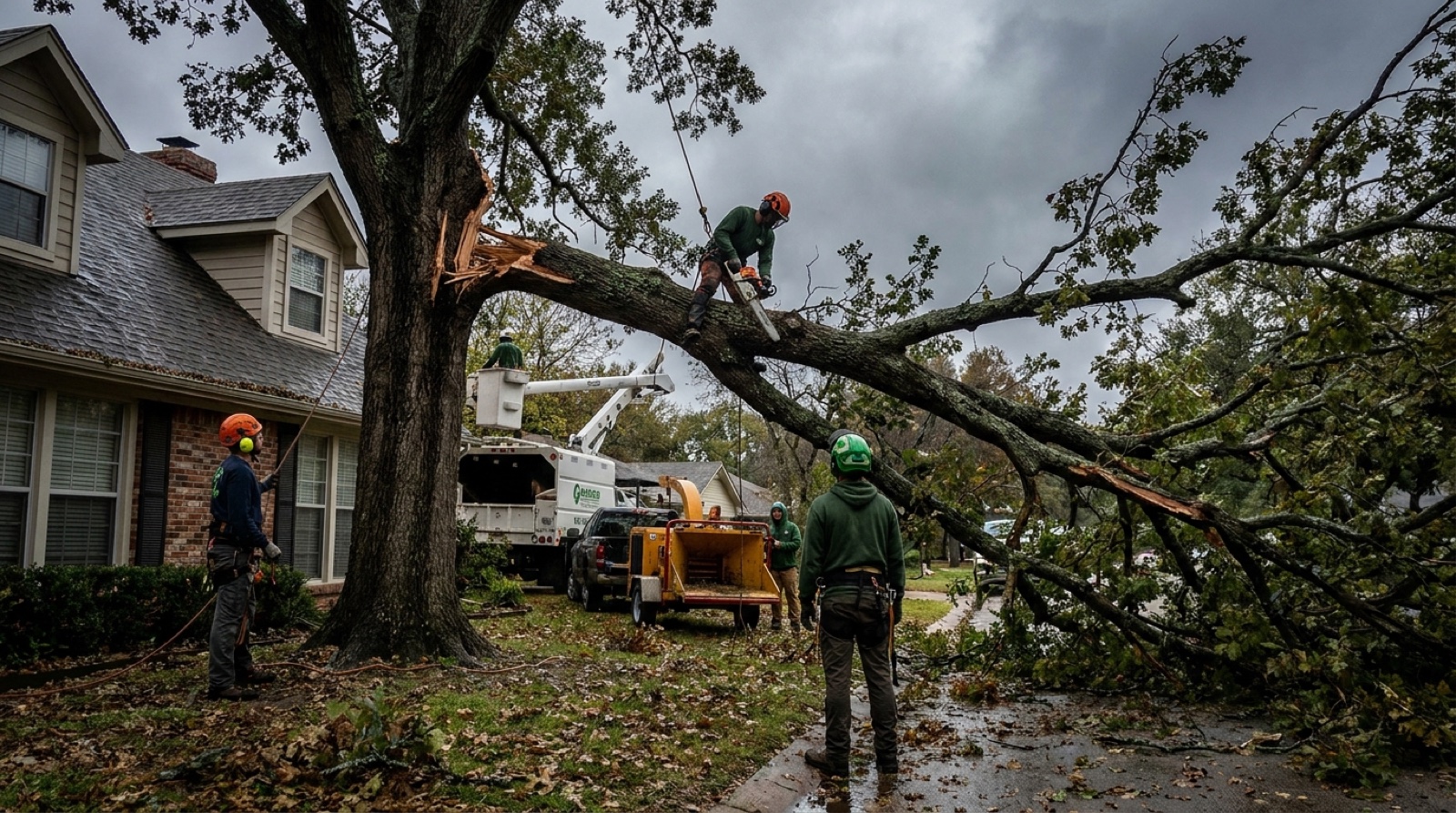
If a storm has already dropped limbs in your Topeka yard this month, deal with the hanging and broken wood first, then look at the whole tree.
A single failed limb is often a warning sign, not a one-off event.
Forecasters in the Kansas City region flagged increased severe weather chances with more waves of rain and storms moving through the area in mid-July.
That pattern reaches Shawnee County and the communities around it. Wet ground and high wind are a bad combination for older trees.
Why Wet Ground Makes Trees Fail
Saturated soil loosens the grip a root system has on the ground.
Add a strong gust and a tree that stood for decades can lean or uproot in minutes.
This is common across Topeka after a run of storms. The trees that come down are usually the ones that were already compromised before the rain started.
Watch for these warning signs after heavy weather:
- New lean that was not there last week
- Soil heaving or cracking near the base
- Large dead limbs still hanging in the canopy
- Splits where two main trunks meet
- Mushrooms or soft, hollow wood at the root flare
Any one of these is worth a closer look. Two or more usually means the tree needs professional attention.
What to Do Right After a Storm
Start with safety and stay away from anything touching a power line.
Never assume a downed line is dead, and keep children and pets clear of the area.
If a limb has crashed onto a roof, fence, or vehicle, that is a job for a crew with the right rigging and insurance.
Cutting a loaded limb from a ladder is one of the most dangerous things a homeowner can attempt. Our storm damage cleanup team handles those situations across Topeka and the surrounding towns.
Here is a quick way to sort what you are seeing after a storm.
| What You See | Risk Level | Next Step |
|---|---|---|
| Small twigs and leaves down | Low | Clear by hand |
| Hanging or broken limbs in canopy | High | Call a crew |
| Limb on structure or line | Severe | Stay clear, call now |
| Whole tree leaning or uprooted | Severe | Stay clear, call now |
The Trees Worth Checking Before the Next Round
Kansas storm season is not over in July, so the smart move is dealing with weak trees before the next system.
A tree that is already dead or dying is the first to fail in wind.
If you have a bare, brittle tree near the house or driveway, planned removal of that dead tree is far cheaper and safer than an emergency call at midnight.
Healthy trees benefit too. Thinning a dense canopy lets wind pass through instead of pushing against a solid wall of leaves.
Good trimming and pruning reduces the sail effect that tears limbs loose. For large mature trees, a crown reduction lowers the leverage that high wind uses to snap a trunk.
After the Tree Comes Down
When a tree does have to go, the stump is the part people forget.
A leftover stump attracts pests and makes mowing a chore.
Our stump grinding service clears it below grade so you can replant or reseed the spot. For a full teardown of a hazardous tree, complete tree removal covers the takedown, the haul-off, and the cleanup.
Keeping Trees Healthy Through Kansas Weather
Strong trees start with strong roots and steady care.
A tree under stress from drought, disease, or poor soil is the one that surprises you in a storm.
Ongoing tree health care catches problems while they are still fixable. Feeding a stressed tree with proper fertilization helps it recover from the swings between dry spells and heavy rain that northeast Kansas sees every summer.
For a tree with a structural weak point, cabling and bracing can add years of safe life.
That is a better outcome than losing a shade tree you have had for decades.
Get Ahead of the Next Storm
If storms have already passed through your part of Topeka or Shawnee County, a quick inspection now can prevent the next round from turning into a claim.
You can reach out for a free quote or a hazard assessment and we will tell you honestly what needs attention and what can wait.
Storm season in Kansas rewards the people who plan ahead. A weak tree spotted in July is a problem solved before the wind finds it.